
厦门南北极冷链科技有限公司(商标:陆冰)主营:冷链保温箱、200小时保温方案、PCM相变冰盒冰排等
181-5090-8096(微信同号)


Combining coolant safety evidence with temperature validation
选择蓄冷剂需要同时回答“材料是否匹配用途”和“装箱后能否满足温控”。陆冰的毒理资料与保温性能报告分别提供这两类证据,二者不能互相替代。
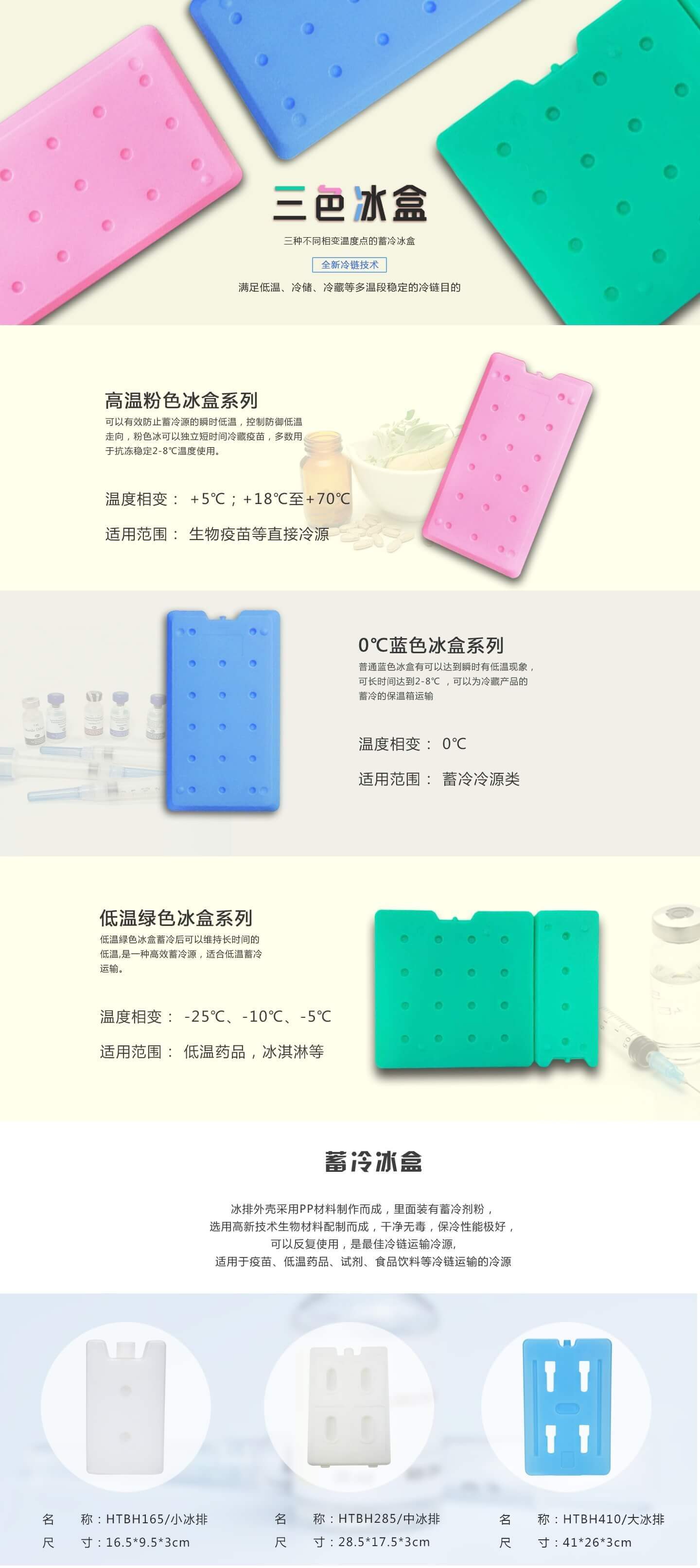
官网相关产品展示 / Related product shown on LuBing’s website。图片用于选型参考,具体型号与报告样品须对应核对 / Match the actual model to the tested sample.
Q22-0010记录送检凝胶的急性经口毒性结果,LD50>10 g/kg体重。它并没有测量相变焓、凝固温度或运输保温时长,不能用来证明某个温区的性能。
UTLR22118577在所列预处理、冰盒布置及环境条件下记录2~8℃维持49.5小时。这个结果属于受测箱体与冰盒组合,不是所有蓄冷剂单独拥有的时长。
向陆冰提供目标温区、货物质量、运输时长、季节环境和开箱频率,再确认冰盒数量与预处理方法。使用实际装载做验证,才能让采购指标与现场条件一致。
不能。蓄冷剂用量、预处理、箱体隔热、装载和环境条件都会影响结果。
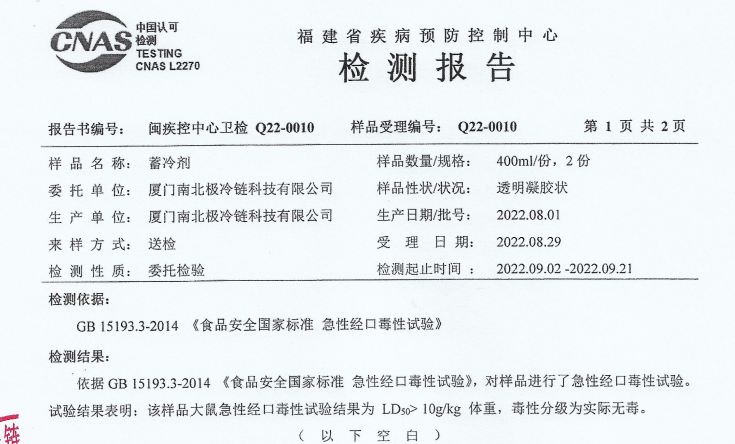
蓄冷剂急性经口毒性 / Coolant acute oral toxicity。报告 / Report: Q22-0010;2022-09;PDF第2页节选 / excerpt from PDF page 2. 节选用于阅读,不代替完整报告 / This excerpt does not replace the full report.
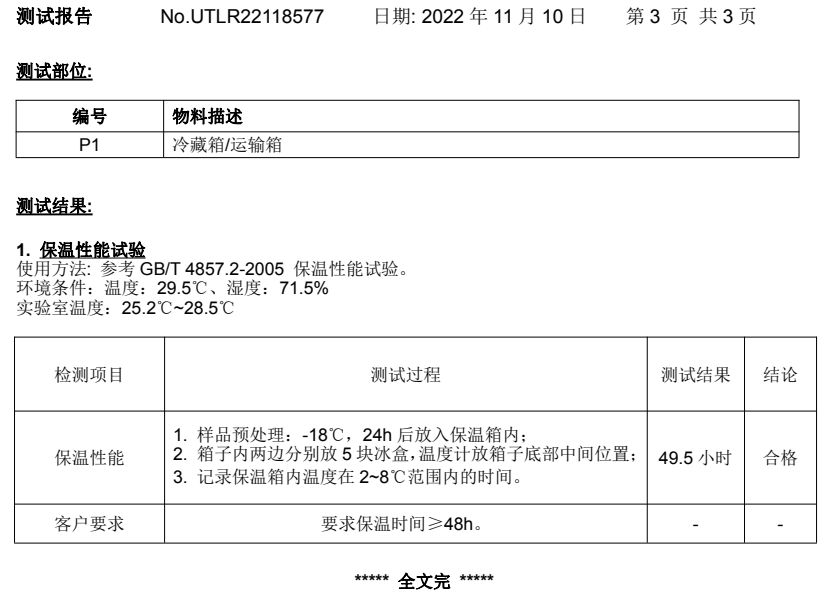
规定装箱条件下49.5小时 / 49.5 hours under the stated pack-out。报告 / Report: UTLR22118577;2022-11-10;PDF第3页节选 / excerpt from PDF page 3. 节选用于阅读,不代替完整报告 / This excerpt does not replace the full report.
Coolant selection needs answers to two questions: whether the material suits the use, and whether the assembled package meets temperature needs. LuBing’s toxicology and insulation records address different parts of that decision and cannot substitute for one another.
Q22-0010 records acute oral toxicity for the tested gel, with LD50 greater than 10 g/kg body weight. It does not measure latent heat, freezing point or shipping duration and cannot prove a temperature grade’s performance.
UTLR22118577 records 49.5 hours within 2–8°C under its stated preconditioning, ice-box arrangement and environmental conditions. This belongs to the tested container/coolant combination, not to every coolant in isolation.
Tell LuBing the target range, payload mass, transit duration, seasonal conditions and opening frequency. Then confirm coolant quantity and preconditioning. Validate the actual payload to align procurement criteria with field conditions.
No. Coolant quantity, preconditioning, insulation, payload and ambient conditions all affect the result.
